Since this article was published, the EU has scrapped the €150 customs-duty exemption. VAT and the IOSS/UOSS schemes explained below are unchanged, but as of 1 July 2026 low-value parcels shipped into the EU now attract customs duty as well. For what changed and what to do about it, read The EU Just Scrapped the €150 De Minimis: What Non-EU Sellers Need to Know.
In This Article
If you sell from the UK to customers in the EU, or you import goods from outside the EU to sell within it, you've probably come across the terms IOSS and UOSS. And if you found the whole thing confusing, you're in good company. Plenty of UK sellers are still trading outside these schemes despite being obliged to register, mostly because nobody has explained them in plain language.
Brexit changed the VAT rules for cross-border selling considerably. What used to be straightforward selling within the EU now involves schemes that barely existed before. Getting it wrong is not just a matter of penalties. Orders get held at customs, customers get surprise VAT bills at the door, and repairing the damage afterwards costs far more than doing it properly in the first place.
The good news is that once you understand what IOSS and UOSS actually are, and which one applies to you, the compliance side becomes manageable. This guide breaks both schemes down so you can work out exactly what your business needs.
What IOSS Actually Is
IOSS stands for Import One-Stop Shop. It's a VAT scheme that simplifies collection for goods shipped to EU customers from outside the EU, which since Brexit includes the UK. Rather than registering for VAT separately in every EU country where you have customers, you register once with a single EU member state of your choice and handle all your EU VAT through that one registration.
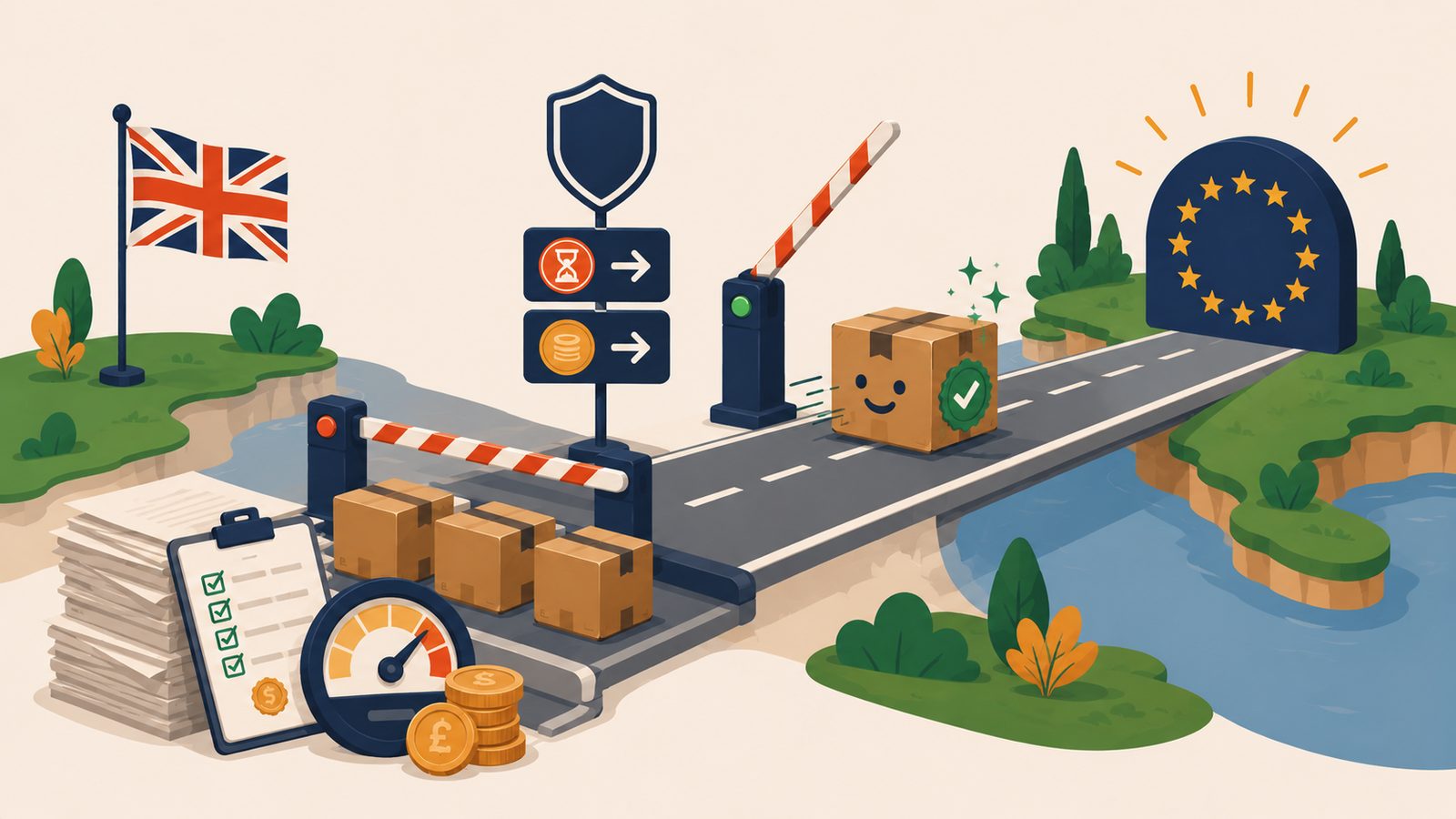
From there the mechanics are simple enough. When an EU customer buys from you, you charge VAT at the rate that applies in their country. You then report and pay everything you've collected through your single IOSS account. Because the VAT has already been dealt with at the point of sale, the customer pays no VAT on import and your parcels clear customs faster. No surprise VAT bills at the door, no couriers holding packages until someone pays. (Note that since 1 July 2026, customs duty is a separate charge that can still apply, see the update note above.)
There are two limits worth noting. IOSS only applies to consignments worth €150 or less, so anything above that needs different arrangements. And it covers business-to-consumer sales only. If you're selling to other businesses, IOSS doesn't apply.
And UOSS?
UOSS is the Union One-Stop Shop, and it deals with a different situation: goods that are already inside the EU when they're sold. It's essentially the post-Brexit successor to the old Distance Selling rules.
Say you're a UK seller holding stock in a German fulfilment centre, or you've imported goods into the EU in bulk and sell them from within EU territory. Those orders are dispatched from inside the EU, so IOSS is irrelevant to them. UOSS is the scheme that applies. The structure is familiar: one registration with one member state, VAT collected at the customer's local rate, everything reported and paid through a single account.
Two differences matter. UOSS has no €150 cap, so it covers goods of any value as long as they're physically located within the EU. And like IOSS, it's for B2C sales. B2B transactions follow separate rules.
One Question Decides Which You Need
Most of the confusion around these schemes disappears when you ask a single question: where is your stock physically sitting when the customer places the order?
Goods dispatched from your UK warehouse to EU customers fall under IOSS. Goods dispatched from an EU fulfilment centre fall under UOSS. If you run both models, perhaps UK stock for slower lines and EU-held stock for your fastest movers, you may well need both registrations.
Do You Actually Need to Register?
This is where plenty of UK sellers go wrong. They assume selling to the EU automatically means registering, but the rules are more specific than that.
You need IOSS if you're a non-EU seller shipping goods directly to EU consumers in consignments worth €150 or less. You need UOSS if your goods are stored somewhere in the EU and sold to EU consumers. You might need neither if you only sell B2B, if your shipments are consistently valued above €150, or if you've registered for standard VAT in individual EU countries instead, though that route means more paperwork rather than less.
The catch is that these are obligations, not options. If you meet the criteria and you're not registered, you're breaking the law. EU tax authorities treat this seriously, and compliance is retroactive. If you've been selling to the EU without registering, they can pursue you for back payments, so the sensible move is to register as soon as you realise you need to.
The Mistakes That Cost Sellers Money
The most expensive mistake is ignoring the rules because they look complicated. Non-compliance leads to customs delays, returned orders, unhappy customers and eventually legal action, all of which cost more than registration ever would.
The next most common is registering for the wrong scheme. Sellers sign up for IOSS when their goods actually ship from an EU fulfilment centre, or the other way round, and create compliance problems that surface months later. Confirm where your stock physically sits before you register anything.
A subtler one: assuming IOSS means no VAT. It doesn't. You still collect VAT, just at the point of sale rather than at import, which usually means adjusting your prices upwards to cover it.
B2B sales catch people out too. Selling to EU businesses triggers reverse-charge rules, where you may not charge VAT at the point of sale but your business customer owes it at their end. Get that wrong and you've created a problem for your buyers as well as yourself.
Then there are marketplace settings. If you sell through Amazon, eBay or Shopify, the platforms need to know you're registered for IOSS or UOSS. Leave the settings blank and VAT may not be collected properly, and you'll be liable for the full amount regardless.
Getting Registered
Both schemes involve registering with EU tax authorities. In practice that means choosing a member state to register with, obtaining a VAT identification number there, registering specifically for IOSS or UOSS, and setting up your filing routine, which runs monthly or quarterly depending on the country and your volume. The exact process varies by country. Some offer clean online registration, others involve considerably more paperwork.
That leaves the question of whether to do it yourself or use an agent. Direct registration is cheaper upfront, but you carry the filing workload and the risk of mistakes. A VAT compliance agent typically costs €500 to €2,000 a year (roughly £430 to £1,700) depending on your sales volume, and in exchange they handle registration, filing and ongoing compliance. Neither route is wrong. If you sell through multiple channels or hold stock in several places, the agent usually earns their fee.
Where to Start
Work through it in order. Confirm where your stock is located, check your typical consignment values, decide whether you're registering directly or through an agent, then get registered and update your marketplace settings the same week.
Worth saying plainly: this is an area where automation helps with the admin around compliance, not the compliance itself. Rule-based workflows can flag consignments near the €150 limit, apply the right VAT rate at checkout and compile your quarterly sales-by-country figures. The registrations and filings themselves are paperwork, and no amount of AI does that for you.
Which Tools Can Do This?
This is one topic where specialists matter more than workflow platforms. VAT compliance services such as Taxually, Avalara and hellotax handle registration, calculation and filing, and most UK sellers use one of these or an accountant rather than going it alone. Workflow platforms like Power Automate, Make and Zapier are useful around the edges: pulling sales data together for your returns, flagging shipments near the €150 threshold, and making sure your IOSS number reaches your shipping labels and customs data. AI has little genuine role in VAT compliance itself, and anyone telling you otherwise is selling something.
If you'd rather have someone look at how EU VAT fits into your wider operations, that's what Fulcrum Three does. We review your setup, flag where you're exposed, and build the reporting and admin automation around it.
Get your EU VAT position checked before it costs you.
Book a Free Operations Audit →