In This Article
Every eCommerce conference this year has had at least one panel on AI agents replacing customer service teams. The pitch is always the same: deploy a bot, cut costs by 70%, and watch satisfaction scores hold steady as if nothing changed.
The reality is more nuanced. Customer service is the highest-stakes place to put AI in an eCommerce business, because every conversation is with someone who has already given you money. Get it wrong and the bill arrives as damaged trust, negative reviews and lost repeat business, which costs far more than any software subscription ever will.
So before you sign up for anything, it's worth being clear about what AI agents genuinely do well, where they still fall short, and how to structure a service operation that uses both sides properly.
What AI Agents Do Well
AI agents are genuinely good at one category of interaction: high-volume, low-complexity questions where the answer already exists in your systems.
Order status enquiries are the obvious example. For most eCommerce businesses they make up 30-50% of all inbound contacts, and every one follows the same shape. An AI agent connected to your order management system pulls the tracking number, current status and estimated delivery date, and answers in seconds without a human ever seeing the conversation.
Product questions sit in the same category. "Is this compatible with X?" and "does it come in blue?" have definitive answers sitting in your product data. An agent with access to your catalogue answers them accurately at two in the morning, and often does the job better than a human who would have to look up exactly the same information.
Returns follow standardised steps, so an agent can walk the customer through the process, send the right form or label, and escalate only when something falls outside the standard path. Password resets, address changes and subscription tweaks are the same story: no judgement required, identical process every time.
Add that lot together and you're looking at roughly half your inbound queue. At a typical UK cost of £3 to £5 per human-handled contact, a store dealing with 2,000 contacts a month is spending £3,000 or more each month on conversations software could resolve faster.
Where AI Agents Fall Short
Now the part the sales demos skip.
Picture a customer whose order was split into two shipments. One part arrived damaged, the replacement went to the wrong address, and they now want a partial refund plus a fresh shipment. The right answer depends on their history, what has already been promised, and a judgement call about what's fair. AI agents struggle badly with this kind of context-dependent reasoning, and when they guess, they guess confidently, which is worse than not answering at all.
Emotion is the other hard boundary. When a customer is genuinely upset, a machine-written apology reads as cold no matter how polished the language model behind it is. The customer knows they're talking to software, and in a moment of frustration that knowledge makes things worse. Complaints are also where the biggest brand-building moments live. A human who handles one with real empathy can turn an angry customer into a loyal one. A bot cannot.
There's subtext, too. A one-word reply of "Fine." might mean satisfied or seething. A good human agent reads the temperature and adjusts. AI takes messages at face value, so it misses the early signals that a conversation is heading somewhere bad.
And some moments simply need authority. "I want to speak to a manager" is not a request for information. It needs someone who can make a discretionary call: offer a goodwill gesture, authorise an exception, or acknowledge that something went wrong in a way that feels real.
The Smart Approach: Triage, Not Replacement
The businesses getting the best results have stopped asking whether a bot can replace their team and started restructuring service into tiers.
The first tier is everything AI can resolve outright: order status, tracking, product queries, policy information, account changes. This typically covers 40-60% of inbound contacts, and customers get their answer in seconds rather than hours.
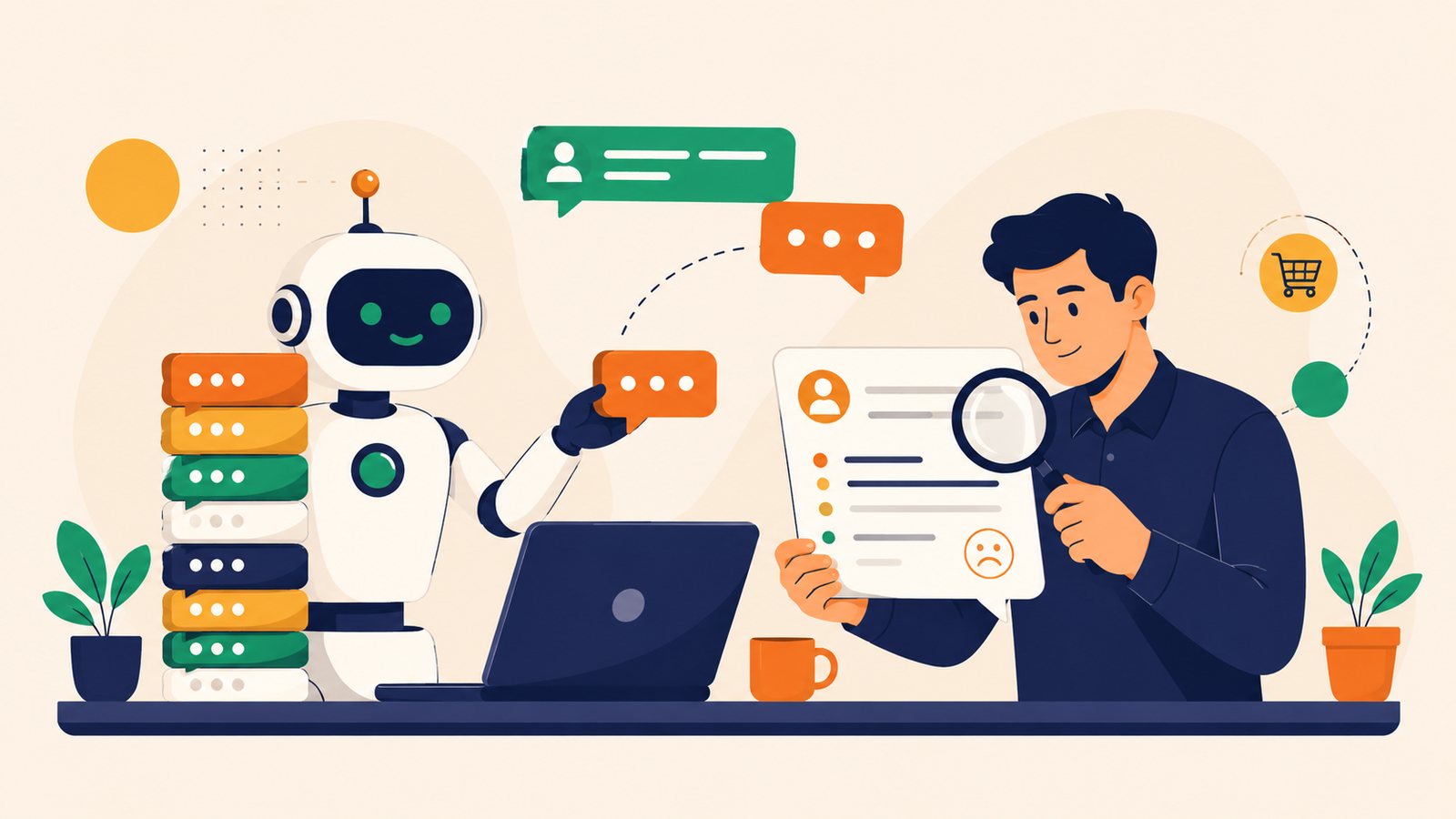
The second tier is where AI assists but a human decides. Non-standard returns, product issues that need investigating, moderate complaints. The agent gathers everything relevant, order history, previous contacts, product details, and hands it to a team member in a structured summary, usually with a suggested reply. The human makes the call and hits send.
The third tier stays human from the first message: escalated complaints, high-value customers, anything needing discretion or empathy, potential policy exceptions.
The AI layer absorbs the volume, and your team spends its time on the conversations where judgement and brand voice actually earn their keep. With a full-time UK support hire costing £24,000 to £28,000 a year once you include overheads, letting software absorb half the queue is often the difference between needing a second hire and not.
What This Looks Like in Practice
A properly designed tiered system sits between your existing tools rather than replacing them.
All customer messages, whether from Shopify, Amazon, email or a contact form, land in a single queue. AI classifies each one by intent and urgency, reading meaning rather than matching keywords, so "I haven't got my order" and "where's my stuff, it's been ages" get routed the same way despite sharing no words.
First-tier messages get an automatic response built from your knowledge base with the order-specific details filled in. Everything else goes to the right team member with context attached: customer history, order details, previous interactions, and a draft reply the agent can edit before sending.
The detail that separates good systems from bad ones is the handoff. If an automatic response doesn't resolve the issue and the customer replies again, the conversation escalates with the full history preserved. Nobody has to repeat themselves, which is the single most common complaint about chatbot support.
Sellers who set this up properly see three things move at once: response times drop because the straightforward queries clear instantly, satisfaction rises because human agents have more time and better context for the conversations that matter, and cost per contact falls because nobody is being paid £13 an hour to look up tracking numbers.
Sellers who get it wrong deploy a chatbot across everything, watch satisfaction scores slide, and conclude that AI doesn't work for customer service. It works. It just doesn't work as a wholesale replacement for people who care about your customers.
Where to Start
Before buying anything, spend a week measuring what actually arrives in your inbox. Tag every contact by type. Most sellers guess their mix badly, and the split determines how much an AI layer is really worth to you.
Then automate the single biggest category first, usually order status, and supervise it for a couple of weeks before extending it. Keep an obvious route to a human throughout. Hiding the escape hatch is how brands end up in screenshots on social media.
Which Tools Can Do This?
Plenty of platforms support a tiered approach. Gorgias and Zendesk are customer service platforms with AI agents built in and strong eCommerce integrations. Power Automate works well if you're already in the Microsoft ecosystem, while Make and Zapier handle the connecting workflows between your store, inbox and helpdesk. Most of these plug into AI models such as OpenAI, Claude and Gemini for intent classification and reply drafting, and custom API work covers anything the off-the-shelf tools can't. The strategy behind the tool matters more than the tool itself.
If you'd rather have someone design the whole operation, balancing AI and human support properly, that's what Fulcrum Three does.
See where automation can absorb the volume so your team focuses on the moments that build your brand.
Book a Free Operations Audit →